CD Review
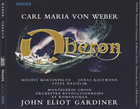
Weber: Oberon, Hillevi Martinpelto, Jonas Kaufmann
- Composer
- Weber
- Artist
- Hillevi Martinpelto, Jonas Kaufmann; Monteverdi Choir, Orchestre Révolutionnaire et Romantique / John Eliot Gardiner
- Label
- Philips
- Catalogue
- 475 6563
- Reviewed by
- Sandy Matheson
You can tell quite a bit about the artistic priorities of the promoters of the time from the playbill for the première of Oberon, which is reproduced in the booklet of John Eliot Gardiner’s new recording. There’s far more about the scenery than the singers, and Weber’s name is given equal prominence with the promise of a “Perforated Cavern on the Beach.” Pearls before swine is about half right.
Oberon, despite Weber’s magical score, has failed to gain a place in the standard repertoire largely because of the innumerable inadequacies of its completely dotty libretto, which brings to mind Phineas T. Barnum’s dictum about never underestimating the poor taste of the public. The liner notes quote Tovey (whose very funny analysis of the overture is well worth reading). His judgement was that “the libretto is not even bad drama (like Euryanthe) but the merest twaddle for regulating the operations of scene shifters.”
Luckily, Oberon has its devotees. Gardiner, in a personal note, reveals that he has conducted more productions of it than any other opera. He has opted for the original English text, which has not been previously recorded. Choosing to avoid Planché’s admittedly dreadful spoken dialogue, he has linked the musical numbers with a narration, read by Roger Allam. It’s not an ideal solution, but there isn’t a totally satisfactory way to present this problematic score, and you can easily miss out the narration if you want to. Gardiner directs it much as Beecham used to conduct his lollipops; he dares you not to be bewitched by it.
This is certainly the best recording that Oberon has yet had. In Hillevi Martinpelto and Jonas Kaufmann, Gardiner has found ideal singers for roles that look back to the Mozart of Die Zauberflöte quite as much as they anticipate Wagner. The set is worth buying for Martinpelto’s gleaming account of “Ocean! Thou mighty monster”, while Kaufmann easily negotiates the heroic roulades of “From boyhood trained” (the preposterous Sir Huon of Bordeaux’s opening number). There are no disappointments at all among the supporting cast, and Gardiner’s Monteverdi Choir contributes vividly as mermaids, slaves, genii and elves.
The period instrument ORR, fresh from a run of performances at the Châtelet, play beautifully for Gardiner, and the recording, made in the wide open spaces of the Watford Colosseum, is atmospheric and imaginatively directed. Very highly recommended.
A note on this page
Originally published by Sandy Matheson, recovered from mmmusic's own archive and reproduced here as the critic wrote it.
Questions about this recording
Why has Weber's Oberon struggled to enter the standard repertoire?
Despite Weber's magical score, the opera's innumerable dramatic weaknesses, J.R. Planché's famously dotty libretto, have kept it on the fringes, a point the critic and analyst Donald Tovey made pointedly of its overture.
What makes this recording different?
Gardiner opted for the original English text, which had not been previously recorded, avoiding Planché's spoken dialogue by linking the musical numbers with narration read by actor Roger Allam instead.
Who are the principal singers?
Hillevi Martinpelto sings Reiza and Jonas Kaufmann sings Sir Huon, backed by Gardiner's own Monteverdi Choir and the period-instrument Orchestre Révolutionnaire et Romantique.
Is this recording still available to buy?
Yes, Philips's catalogue number 475 6563 remains findable through classical retailers. We don't run an in-house shop, so we link out to Amazon and Discogs below.


