CD Review
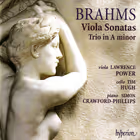
Brahms: Viola Sonatas, Op.120; Trio in A minor, Op.114
- Composer
- Brahms
- Artist
- Lawrence Power, viola; Tim Hugh, cello; Simon Crawford-Phillips, piano
- Label
- Hyperion
- Catalogue
- CDA67584
- Reviewed by
- Ruth Squire
Lawrence Power’s recording for Hyperion of Bowen and Forsyth viola sonatas was received with great acclaim. This new release deserves similar praise. The Brahms sonatas, originally written for clarinet and piano, were adapted by Brahms for both viola and piano and for violin and piano. He went to significant lengths in the viola version to accommodate the instrument’s huskier character. As with much of Brahms’s later chamber music, there is a great deal of contrast within the pieces, creating a dynamic texture.
The balance between the viola and piano is a delicate one, relying on the sensitivity of both players. Here, Lawrence Power and Simon Crawford-Phillips make a good team. Each has space to explore the music and seems to inspire the other. In the more delicate moments (for example the Andante un poco adagio of Op.120, No.1) the intimate atmosphere is breathtaking. By way of contrast, in the livelier moments (for example the Vivace of the same sonata), the pair practically skip along, without losing sight of the music’s meaning.
Also included on the disc is Brahms’s Trio in A minor. As with the sonatas, this trio originally appeared in a different form, starting out as part of the Clarinet Quintet and Trio. Brahms, again, adapted the piece to create a trio for viola, cello and piano. For this work, cellist Tim Hugh joins Power and Crawford-Phillips. From the opening notes, it is clear that these three musicians work well together. There is no sense of one primary voice; indeed the viola and cello take on similar roles. The Allegro movement demonstrates the ability of each player to bring his own individual character to the music while forming part of a cohesive team.
The programme on this disc is very similar to that which Power and Crawford-Phillips played at the Edinburgh Festival two years ago. For those who saw the concert, this recording makes for a wonderful (albeit belated) souvenir.
A note on this page
Originally published by Ruth Squire, recovered from mmmusic's own archive and reproduced here as the critic wrote it.
Questions about this recording
Were the Op.120 sonatas originally written for viola?
No, Brahms originally wrote them for clarinet and piano, then adapted them himself for both viola and piano and for violin and piano, going to significant lengths in the viola version to accommodate the instrument's huskier character.
What's the origin of the Trio in A minor?
It originally appeared in a different form, starting out as part of the Clarinet Quintet and Trio, before Brahms adapted it into a trio for viola, cello and piano.
Had this programme been performed live before the recording?
Yes, the review notes it's very similar to a programme Power and Crawford-Phillips played at the Edinburgh Festival two years before this disc was reviewed.
Is this recording still available to buy?
Yes, Hyperion's catalogue number CDA67584 remains findable through classical retailers. We don't run an in-house shop, so we link out to Amazon and Discogs below.
What else is on this Hyperion disc besides the two viola sonatas?
Brahms's Trio in A minor, Op.114, originally written for clarinet (or viola), cello and piano. Hyperion catalogue CDA67584, filed under Romantic-era chamber repertoire.


