CD Review
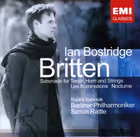
Britten: Les Illuminations; Serenade for Tenor, Horn & Strings; Nocturne
- Composer
- Britten
- Artist
- Ian Bostridge, tenor; Radek Baborák, horn; Berlin Philharmonic Orchestra / Simon Rattle
- Label
- EMI
- Catalogue
- 7243 5 58049 2 1
- Reviewed by
- Frances Boyson
“Britten’s music is ephemeral,” said the late Malcolm Williamson, Master of the Queen’s Music from 1975, “it will not last”. With new readings of his song-cycles as confident and engaging as these, there can be no doubt as to the longevity of these unique works.
The clear highlight of the disc is the 1958 Nocturne, written in advance of A Midsummer Night’s Dream. The work is set in one continuous movement, but each verse is that of a different poet, with a correspondingly different harmonic world. Each opens with an instrumental obbligato presented with impeccable clarity and always retaining an improvisatory nature. Bostridge demonstrates his remarkable ability to control the dramatic tension not only of his own vocal power but that of the ensemble around him, the change of tone at the close of The Kraken on the words “In roaring he shall rise and on the surface die” sends shivers down my spine. The wonderful timpani obbligato opening the verse from Wordsworth’s The Prelude sets up a journey to an orchestral explosion unlike any other orchestral music by Britten.
In Les Illuminations, the strings use a raw, edgy, sometimes unpolished sound, which energises the ensemble from the outset. The BPO’s typically vast palette of tone-colours is fully employed, from the eerie pulsating of Villes to the sonorous landscape of Interlude, which from somewhere seems to draw the timbres of a full orchestra. Bostridge invites us into his musical world and there you are transfixed until the final repetition of “J’ai seul la clef de cette parade sauvage” (“I alone have the key to this savage parade”) and the hauntingly beautiful Départ.
Throughout, the control of the ensemble apparently passes effortlessly from the orchestra to Bostridge and back again, but of course it is Rattle’s confident musical vision that secures this dramatic effect.
A note on this page
Originally published by Frances Boyson, recovered from mmmusic's own archive and reproduced here as the critic wrote it.
Questions about this recording
What three Britten works are on this disc?
Les Illuminations, Op. 18 (1939); the Serenade for Tenor, Horn and Strings, Op. 31 (1943); and the Nocturne, Op. 60 (1958), all major song-cycles for tenor and orchestra.
What makes the Nocturne distinctive?
It's set as one continuous movement, but each verse sets a different poet, with its own instrumental obbligato and harmonic world, the review singles it out as the disc's clear highlight, written just before A Midsummer Night's Dream.
Who performs the horn part?
Radek Baborák, then principal horn of the Berlin Philharmonic, featured prominently in the Serenade.
Is this recording still available to buy?
Yes, EMI's catalogue number 7243 5 58049 2 1 remains findable through classical retailers. We don't run an in-house shop, so we link out to Amazon and Discogs below.


