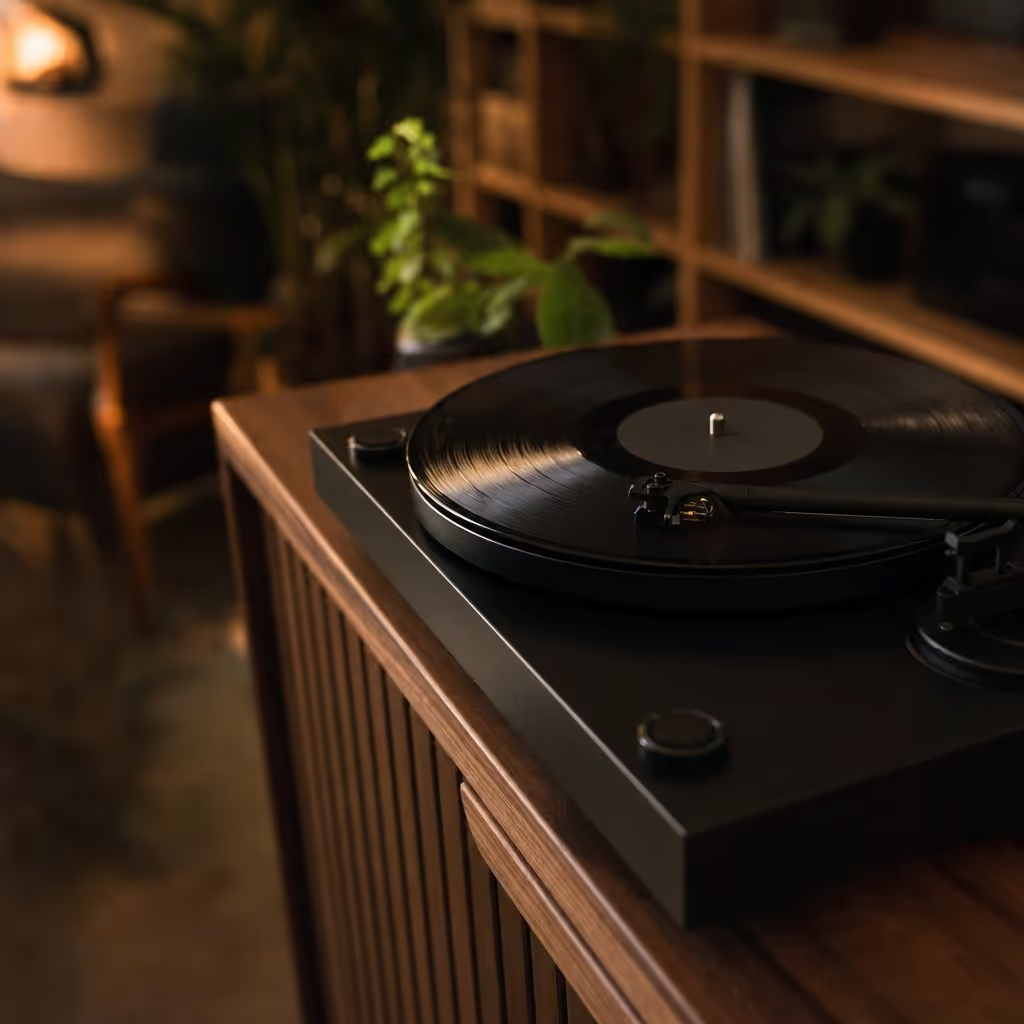
Why vinyl came back is a question with a real, checkable answer, not just nostalgia, vinyl’s story over the past forty years isn’t really a straightforward “died, then came back” narrative. It’s closer to a mainstream retreat followed by a mainstream return, with a genuine niche audience holding the format together in between. This is the vinyl revival explained without the hand-waving, and it’s really a short history of vinyl records over one specific forty-year stretch.
The retreat, before this vinyl revival in record culture
Through the 1990s and into the 2000s, major labels shifted their manufacturing and marketing weight decisively toward CDs, and later toward digital downloads and streaming. Vinyl pressing capacity contracted accordingly, plants closed or scaled back, and new-release vinyl became a smaller and smaller share of what labels actually pressed. It never disappeared entirely: DJ culture (particularly hip-hop, house and techno, all built around physical mixing and sampling) kept meaningful demand alive, as did audiophile and collector communities who’d never really left the format, and a scattering of independent labels who kept pressing through the lean years.
What actually brought it back
Why vinyl came back has no single cause, but a few threads run through most credible accounts of the format’s return. Streaming and digital downloads made recorded music itself effectively weightless, always available, never physically owned, which created a counter-appetite for something tangible: a large sleeve, real artwork, a physical object you actually have to get up to interact with rather than something that plays in the background. Once that demand became visible in sales figures, major labels and retailers responded with reissue programmes and renewed new-release pressing, which in turn justified new pressing plant investment, which further eased what had briefly been a real supply bottleneck.
The sound-quality debate, briefly
Whether vinyl sounds “better” than digital formats is a genuinely contested question that depends heavily on factors that have nothing to do with the format itself, the quality of the original mastering, how well a specific pressing was manufactured, and the quality of the playback chain all matter more than “vinyl vs. digital” as an abstract comparison. What’s more consistently true, regardless of where you land on that debate, is that vinyl offers a different kind of listening experience: physically flipping a record, engaging with full-size artwork, and the practical limitation of an album side (typically 18-22 minutes) that encourages listening to a sequence rather than skipping between tracks.
Who actually buys vinyl now
The audience behind vinyl’s comeback isn’t one group but a mix of overlapping ones, and understanding that mix explains a lot about how the format is sold today. Longtime collectors and DJs who never really left kept the infrastructure, pressing plants, specialist retailers, secondhand networks, alive through the lean years, and that infrastructure is a real part of why the revival could happen as fast as it did once demand returned. Alongside that core, a newer audience discovered vinyl for the first time via streaming itself, paradoxically, a generation that grew up with music as an app-based, ownerless stream sought out a physical counterpart precisely because owning nothing had become the default. A third, less-discussed group buys vinyl as a gift or a display object as much as a listening format, drawn by cover art and the ritual of a record more than by any sound-quality argument, which is part of why reissue packaging and deluxe editions have become such a visible part of the current market.
New pressings and reissues, running in parallel
Two distinct markets sit under “vinyl” today, and they don’t always overlap. New-release vinyl, current albums pressed alongside their digital release, depends on the pressing-plant capacity discussed above, and lead times there have been a genuine constraint at points during the revival. Reissue vinyl, classic albums and back-catalogue pressed again, sometimes for the first time in decades, runs on a different cycle entirely, often timed to anniversaries or remastering projects, and has become its own specialist industry with dedicated reissue labels. A record shop’s new-release wall and its reissue section are effectively serving two different kinds of demand, even though they sit on the same shelves.
Why vinyl came back: where that leaves a collection today
None of this history of vinyl records changes the practical basics of actually owning them, they still need proper storage, proper care, and a turntable that’s actually set up correctly to get the most out of them, which is exactly what the rest of this site is for.
Why vinyl came back, in one line
If there’s a single honest answer to why vinyl came back, it’s this: a real, physical alternative to weightless digital listening met genuine renewed demand at exactly the moment pressing plants and retailers were ready to meet it. Everything else in this vinyl revival, the record culture around collecting, the reissue programmes, the DJ and audiophile communities that never left, built on that one basic shift. That’s also the same record culture the rest of this journal keeps coming back to, the short version of the vinyl revival explained, if you only remember one paragraph of it.