Most “best turntables UK” roundups jump straight to naming specific models, which is useful once you already know what you’re comparing them against. Before that: three things actually separate a turntable that sounds decent from one that doesn’t, regardless of brand or price bracket, and they matter whether you’re shopping for the best turntables UK retailers currently stock, or specifically hunting through the best turntables under 200 pounds.
Best turntables UK buyers actually need: budget drive type basics
Any real turntable buying guide has to start here. A turntable’s motor either drives the platter directly (direct-drive) or via a belt (belt-drive). Belt-drive mechanically isolates the platter from motor vibration, which generally gives quieter, more stable playback for critical listening, it’s the more common choice for home hi-fi turntables for exactly this reason. Direct-drive turntables offer near-instant start-up torque and are more resistant to speed changes under stylus drag, which is why they’re the DJ standard, but that trait matters far less for someone just playing records at home.
The cartridge is doing most of the work
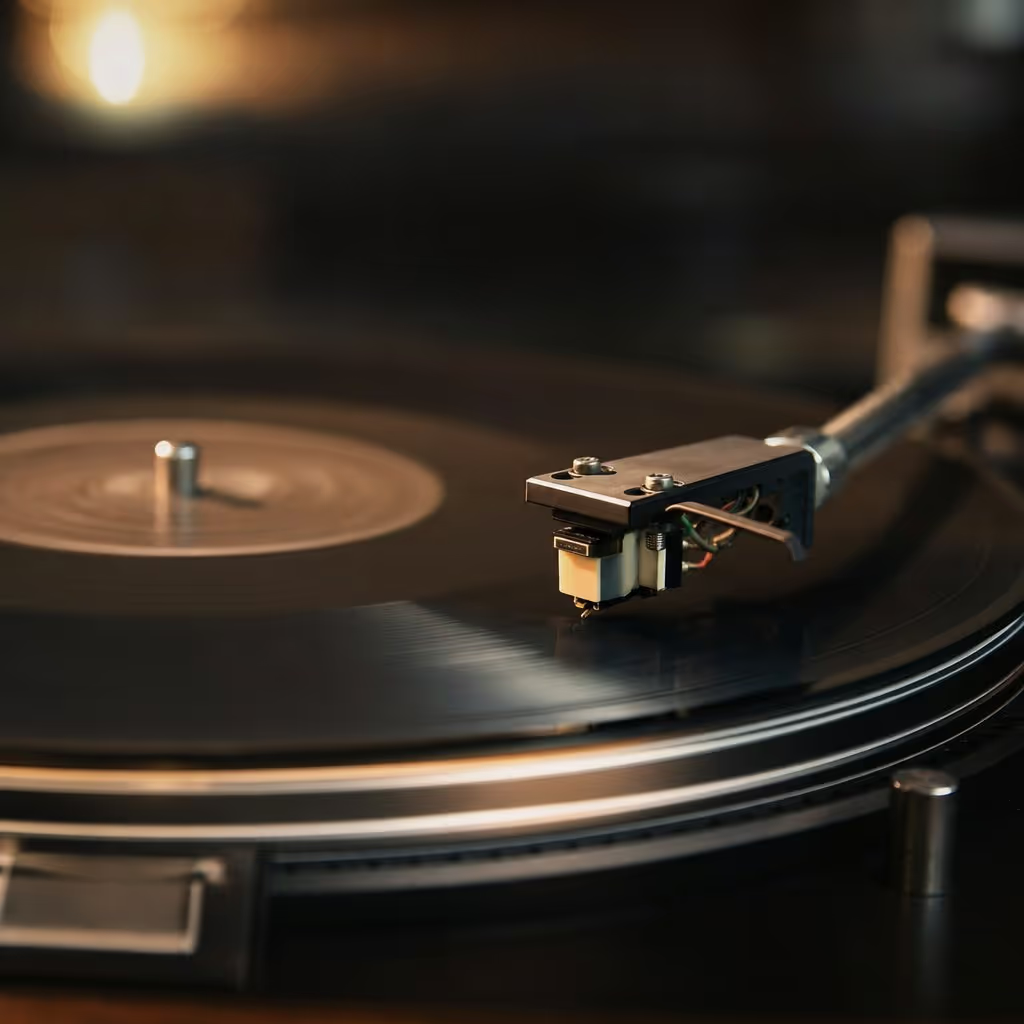
The stylus and cartridge are what actually convert the groove’s physical shape into an electrical signal, everything else in a turntable (plinth, platter, motor, tonearm) exists to hold that cartridge steady and level while it does that job. A turntable with a mediocre cartridge and an excellent plinth will generally sound worse than the reverse. On budget and mid-range turntables specifically, cartridge quality varies more between models than almost any other single spec, and it’s usually the first sensible upgrade if a turntable already sounds “close but not quite right.”
Phono stage: built-in, switchable, or none
A phono stage is much quieter and differently equalised than a normal line-level audio signal (this comes from how records are physically cut, bass frequencies are reduced and treble boosted during mastering, then reversed on playback via what’s called RIAA equalisation). That correction and boost happens in a phono stage, either built into the turntable, built into an amplifier’s dedicated phono input, or as a separate outboard box. Getting this wrong is the single most common reason a “correctly connected” turntable sounds thin, quiet or distorted, always check whether your amp has a phono input, and if not, whether your turntable’s built-in phono stage is switched on.
What this buying guide says actually justifies spending more
Past a genuinely competent entry point, extra spend tends to go toward: better platter materials and bearings (reducing rumble and improving speed stability), better tonearms (reducing tracking error across the record), and better cartridges (the point above, restated, it’s usually worth prioritising this over anything else). Built-in speakers, Bluetooth output and all-in-one “suitcase” turntables trade real fidelity for convenience, which is a reasonable choice for casual background listening but not for anyone who cares how the record actually sounds.
This turntable buying guide deliberately covers principles rather than a shifting model list, but as a rough anchor: the best turntables under 200 pounds tend to already hit the “genuinely competent” bar described above, while anything meaningfully cheaper usually compromises on one of the three fundamentals, drive type, cartridge or phono stage, covered here. Among the best turntables UK shoppers can find at that price, the difference almost always comes down to which of those three corners got cut.
Setup mistakes that undercut a good turntable
A turntable that’s genuinely well specified can still sound mediocre if it’s set up carelessly, and this trips up first-time buyers more often than any hardware compromise. Three habits matter most: keeping the turntable on a level, stable surface (even a slight tilt affects tracking and, over time, wears a stylus unevenly), setting tracking force to the cartridge manufacturer’s recommended weight rather than guessing (too light causes skipping and groove damage from bouncing, too heavy accelerates wear on both stylus and record), and setting anti-skate to match, a control that’s easy to ignore entirely on entry-level decks but that meaningfully affects how evenly the stylus sits in the groove. None of this costs anything beyond a few minutes with the manual, but skipping it is the single most common reason a turntable that should sound good doesn’t.
Buying to upgrade later, vs buying once
Two reasonable strategies exist for a first turntable, and it’s worth picking one deliberately rather than by accident. The first is buying a turntable built around a standard, user-replaceable cartridge and headshell, which costs a little more up front but means the single most impactful upgrade, a better cartridge, stays available without replacing the whole turntable later. The second is buying an all-in-one unit with a fixed, non-replaceable cartridge, accepting a hard ceiling on future sound quality in exchange for a lower price and one less thing to think about. Neither is objectively wrong, but conflating them is where buyers end up disappointed, someone who actually plans to upgrade later needs the first kind from day one, since the entry-level “suitcase” turntables covered earlier in this buying guide generally can’t be upgraded into that first category at all.