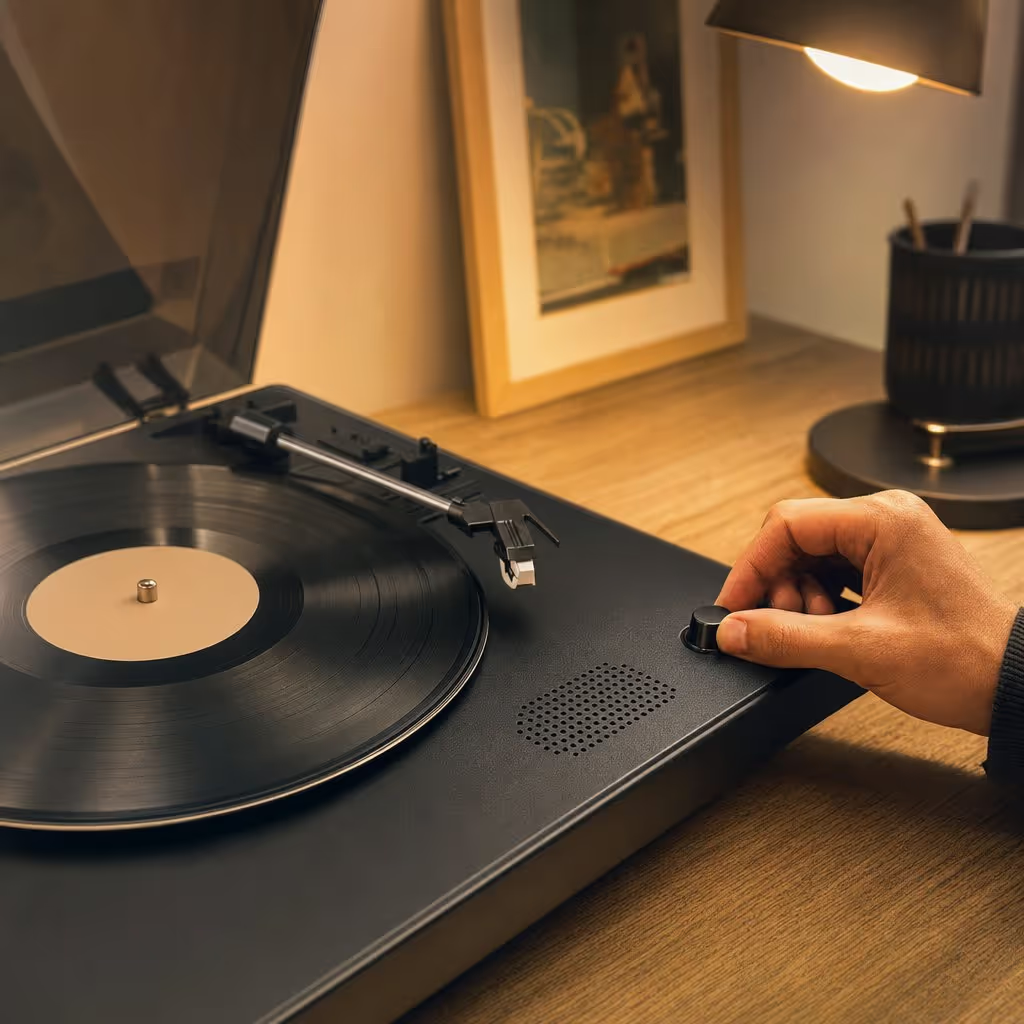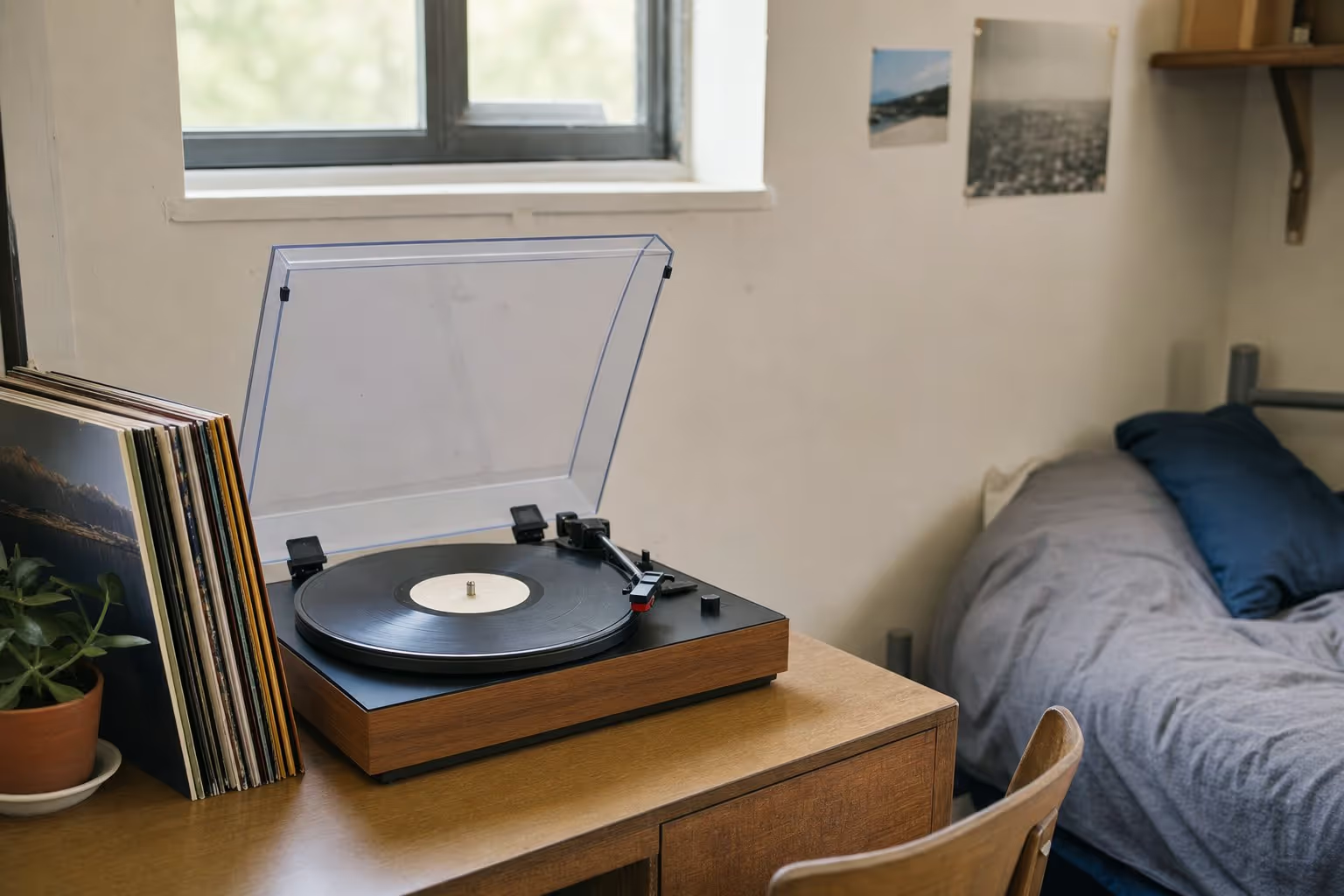
Under £200 is a real, viable budget for a first turntable, but it’s also where the worst products in the whole category live, because “record player” is an easy thing to badge cheaply. Two decisions matter more than any specific model name.
The cartridge decision is not optional
The single biggest quality gap at this price point is cartridge type: magnetic cartridges track the groove more lightly and accurately than the ceramic cartridges found in many all-in-one “suitcase” players, which often track at a heavier force that can audibly and measurably wear records faster over repeated plays. This isn’t a subtle audiophile distinction, a heavy-tracking ceramic cartridge genuinely degrades vinyl over time in a way a well-set-up magnetic cartridge doesn’t. Checking cartridge type before buying anything under £200 is worth five minutes of research.
Built-in speakers are the real trade-off
Most sub-£200 all-in-one players put their budget into looking complete, a lid, built-in speakers, sometimes a carry handle, rather than into the parts that affect sound quality. Splitting the same budget between a simpler turntable with a proper magnetic cartridge and a pair of inexpensive active speakers usually beats an all-in-one unit on actual sound quality, at the cost of needing two boxes instead of one and a bit more counter space.
What’s realistic to expect
At this budget, expect: a belt-drive mechanism, a pre-mounted magnetic cartridge (check this explicitly), a built-in switchable phono stage (useful if your amp or speakers don’t have one), and adequate but not exceptional speed stability. What you shouldn’t expect: audiophile-grade platter materials, a tonearm that competes with mid-range hi-fi turntables, or meaningfully better sound from Bluetooth output versus a wired connection, Bluetooth on a budget turntable is a convenience feature, not a sound-quality one.
Second-hand as a genuine alternative
A well-maintained turntable from the used market, charity shops, local classifieds, dedicated hi-fi resellers, can meaningfully outperform a new budget model at the same price, since turntable build quality from a decade or two ago at the entry-to-mid level was often more metal-and-glass, less plastic. The trade-off is needing to check stylus wear (a badly worn stylus can damage records) and belt condition (a perished belt is a cheap, easy fix, but budget for it) before assuming a bargain is actually a bargain.