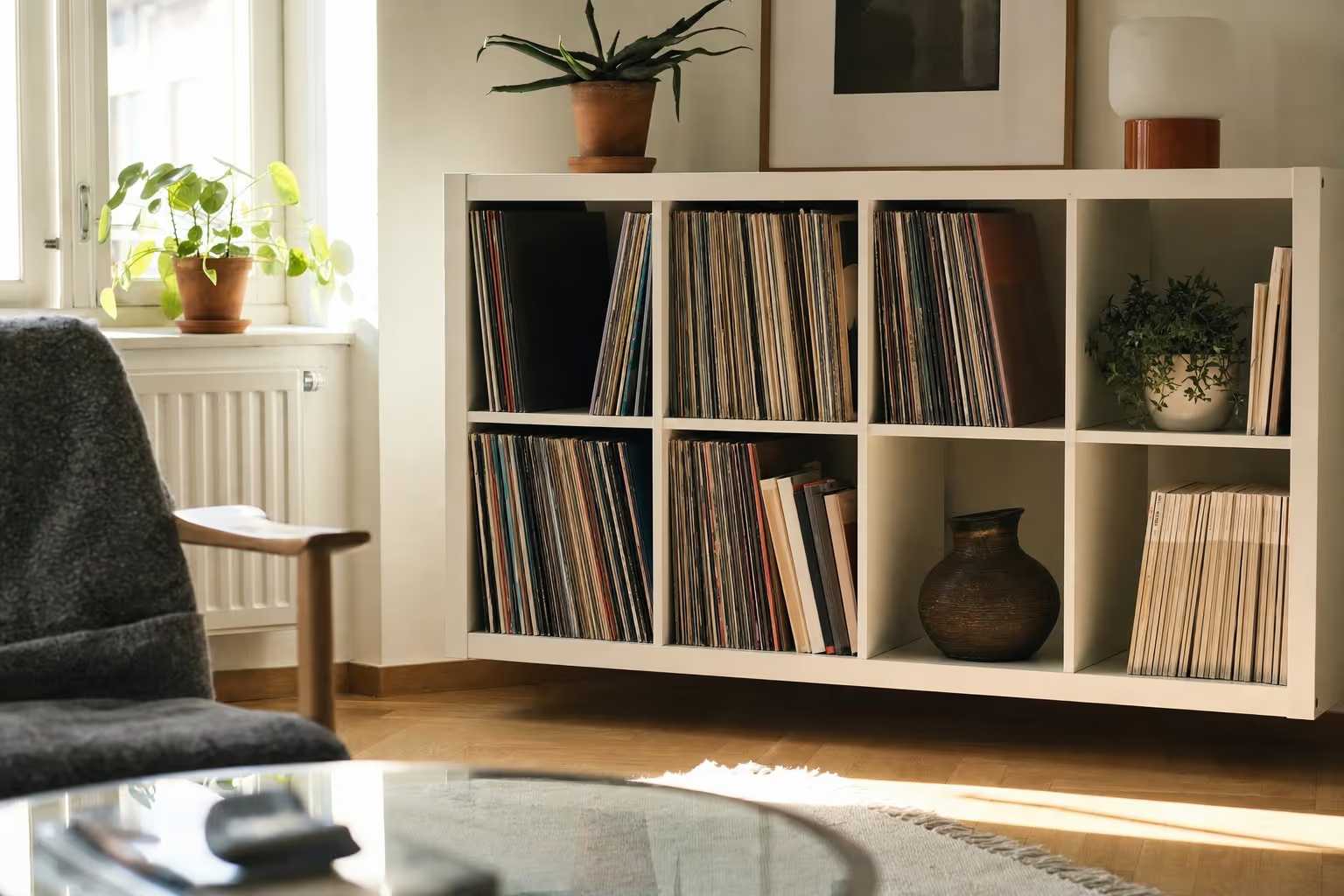
The Kallax shelving unit has become the de facto standard vinyl storage recommendation online, largely by accident: IKEA didn’t design it for records, but its cube dimensions happen to land close enough to standard 12” sleeve size that it works without much modification. It’s worth understanding exactly why it works, and where it doesn’t, rather than assuming the internet consensus applies to every situation.
Why the dimensions work
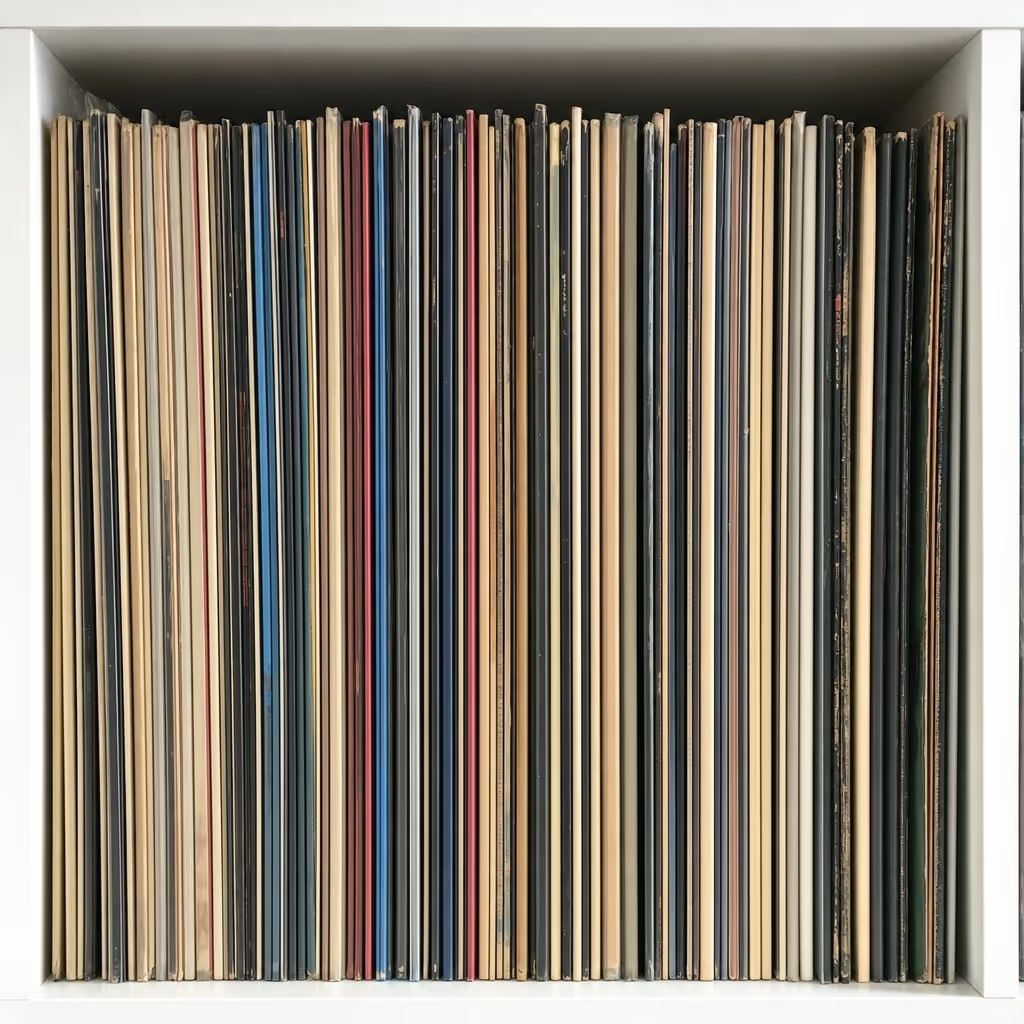
A Kallax cube’s internal opening is close to 33cm square. A 12” record sleeve is about 31.5cm x 31.5cm. That leaves a small margin, enough to slide records in and out without excessive friction, but tight enough that a mostly-full cube keeps its records upright without extra support. A cube that’s only a third full, on the other hand, will let its records lean sideways, which is worth avoiding for any collection you’re keeping long-term.
Realistic capacity, not internet-forum capacity
Online estimates for “how many records fit in a Kallax cube” vary wildly, mostly because they don’t specify packing density. At a comfortable browsing density, records close enough not to lean, loose enough to flip through without straining sleeves, expect 60-80 LPs per cube. Packed to genuine maximum density, more like 90-100, but at that point flipping through the collection becomes a two-handed operation and sleeve corners take more wear.
The orientation question
Most people run Kallax cubes with the opening facing outward, spine-up, so records can be browsed like a filing cabinet. A smaller number of collectors instead lay the whole unit on its back so cubes open upward, this avoids any risk of records sliding forward and out of a cube during a move, but makes daily browsing considerably slower, since you’re lifting records out vertically rather than sliding sleeves forward. For a static home setup, upright orientation with reasonably full cubes is the more practical default.
Where it falls short
Two real limitations are worth knowing before committing a whole wall to Kallax cubes. First, the shelving is particleboard, not solid wood, under sustained heavy loading over years, wider units in particular can develop a slight sag that’s hard to reverse. Keeping individual cube weight reasonable (i.e. not trying to force in more records than comfortably fit) mitigates this. Second, Kallax units have no doors by default, so records are exposed to dust and, depending on room layout, direct light, a real consideration if the unit sits opposite a window. Add-on doors are available as a separate purchase if that matters to you.