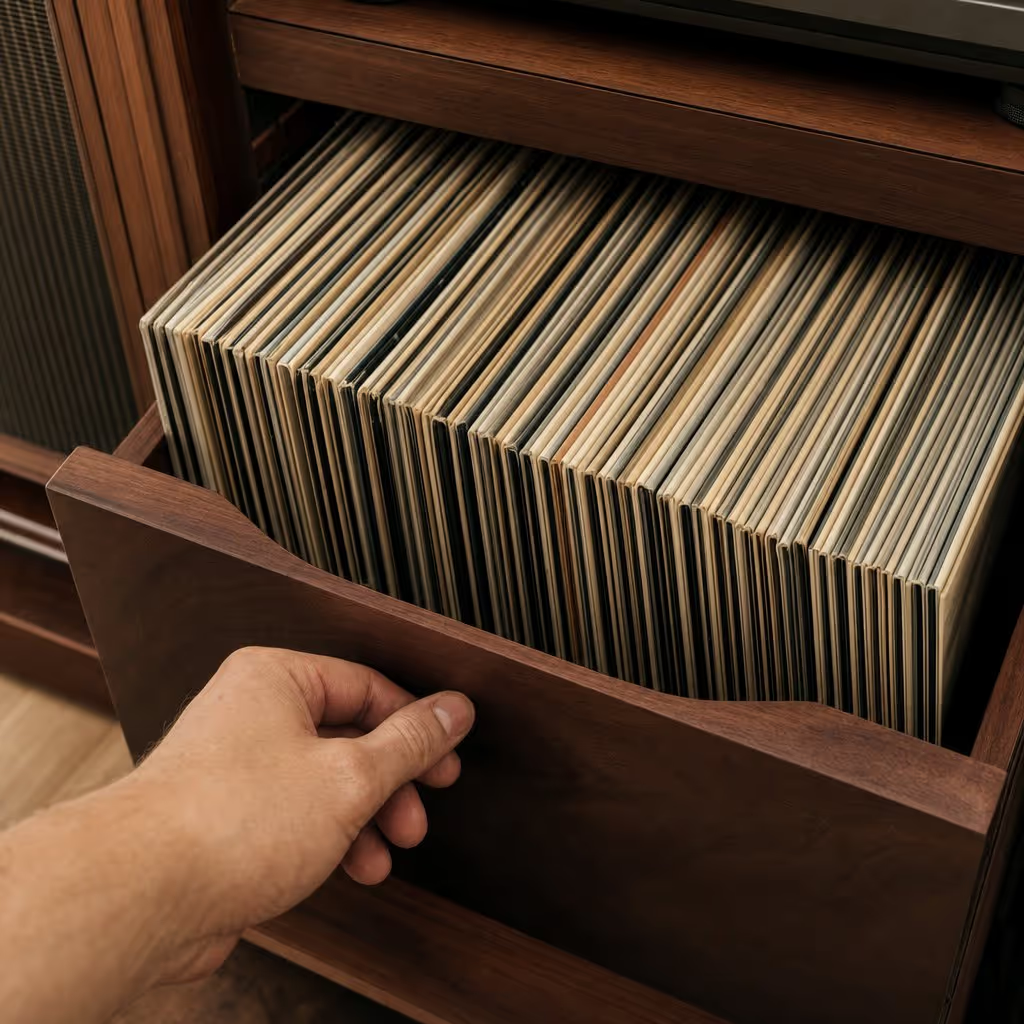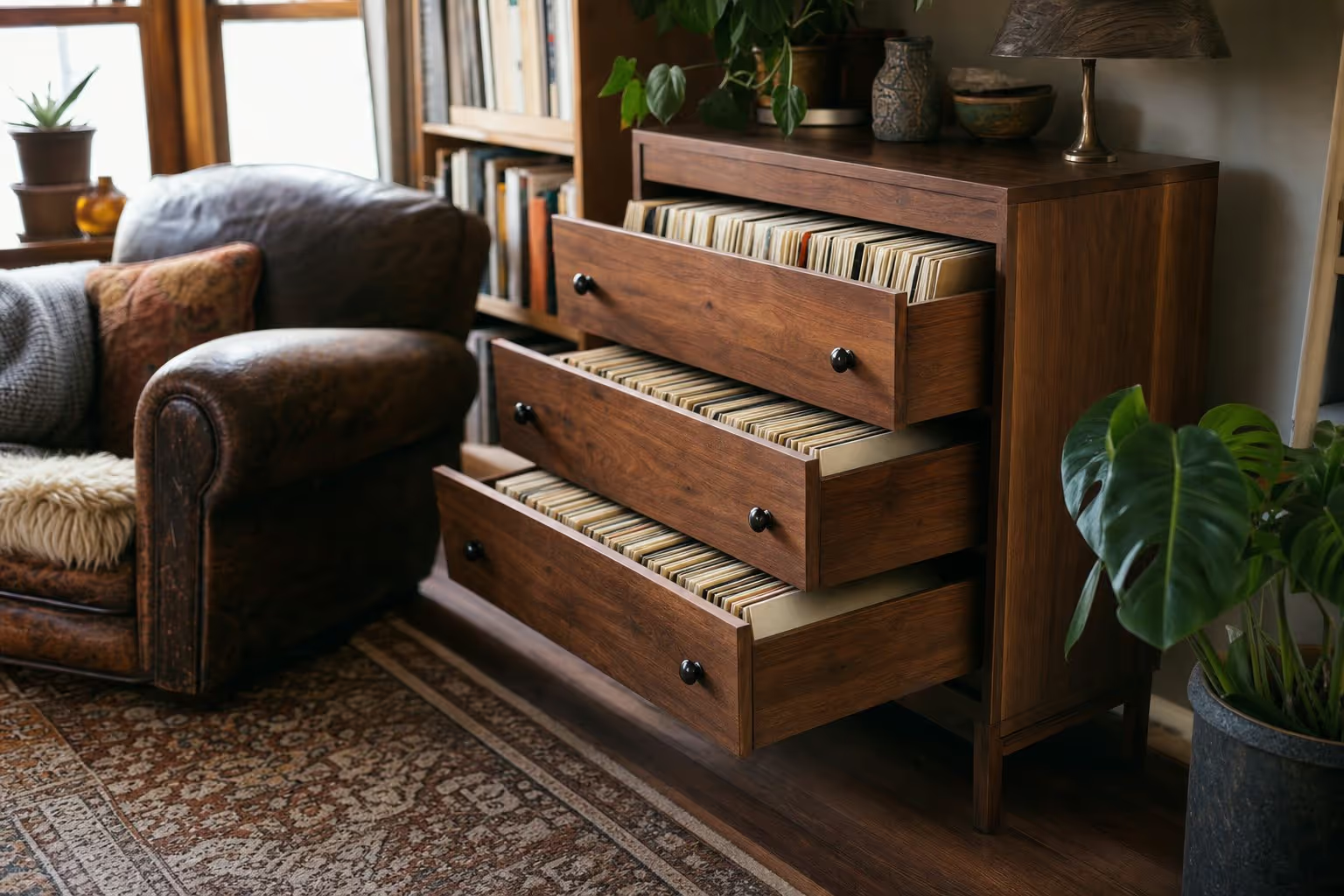
The instinct when buying vinyl storage cabinets is to buy for the collection you have today. The better approach is to buy for the collection you’ll have in two years, because a growing collection is the whole point of collecting, and because vinyl storage furniture is annoying to replace once it’s built into a room’s layout.
Work out real capacity first
A 12” LP sleeve is roughly 31.5cm x 31.5cm, and a full album needs about 1cm of shelf depth per record when stored upright and reasonably loosely packed. That means a single 30cm-wide cube holds around 25-30 records if you want to be able to flip through them without wrestling, closer to 40 if you’re willing to pack tighter and lose easy browsing. Multiply out from there: real record storage cabinets with six such compartments realistically hold 150-240 records depending on how tightly you’re willing to pack it, not the “500 records!” figure some listings imply by assuming records are packed edge-to-edge with zero browsing room.
Furniture that actually varies between vinyl storage cabinets
Beyond raw capacity, three things are worth checking before buying:
- Shelf depth. Genuine vinyl storage furniture is built around 31-33cm depth. Generic bookshelves are often too shallow, forcing sleeves to overhang the edge where corners get crushed.
- Compartment width. A too-narrow compartment (under about 32cm internal width) makes records lean, which is the single most common cause of slow warping in home storage.
- Access. Front-loading vinyl storage cabinets (open cubbies or drawers you pull records forward from) suit browsing-heavy collections; closed cabinets with doors suit rooms where dust or direct light is a real concern, at the cost of slower access.
Sizing vinyl storage cabinets for real rooms, not a showroom
Most people don’t have a dedicated listening room, so the practical question for any vinyl storage cabinets is usually “what fits against this one wall without dominating it.” A run of narrow, floor-to-ceiling cube storage (roughly 30-35cm deep, whatever width the wall allows) tends to use a small footprint more efficiently than a single wide, shallow sideboard-style unit, because you’re building capacity vertically rather than eating floor space horizontally. If floor space is genuinely tight, wall-mounted record shelving, effectively a bracket system rather than record storage cabinets in the traditional sense, trades some structural rigidity for using no floor space at all, and works fine for collections under a few hundred records as long as the wall fixings are rated for the real weight (a metre of tightly packed LPs can weigh 30kg or more). In real rooms with awkward corners or low ceilings, this kind of modular vinyl storage furniture usually beats a single fixed cabinet anyway.
Vinyl storage cabinets vs open shelving
The two real options for most rooms are enclosed vinyl storage cabinets and open shelving, and the trade-off is straightforward. Open shelving (cube storage, bracket-mounted shelves, a simple ladder unit) is cheaper per record stored, easier to browse at a glance, and easier to extend later by just adding another unit. The cost is exposure, sleeves face open air, gathering dust, and take whatever UV a room’s windows throw at them over years. Enclosed cabinets with doors solve both problems and tend to look more like furniture and less like storage, which matters in a living room doing double duty as a listening space. The trade-off there is speed: pulling a record from behind a door is a two-step motion instead of one, which sounds trivial until it’s the reason a full crate never gets flipped through. Neither option is wrong; the honest way to decide is by how the room is actually used. A dedicated listening space that already keeps records out of direct light can lean open and cheap; a shared living room where dust and stray sunlight are real, ongoing problems is where the cabinet earns its higher price.
Common mistakes when buying vinyl storage furniture
The most common mistake isn’t picking the wrong material or finish, it’s buying for the wrong number. Furniture bought for exactly today’s collection is usually full within a year for anyone still actively buying records. The second mistake is treating listed “capacity” figures at face value; a unit marketed as holding several hundred records has usually been measured packed edge-to-edge, tight enough that getting one record out scuffs its neighbours, fine for archive storage, miserable for anything meant to be browsed regularly. The third is ignoring weight: a metre of tightly packed LPs can run to 30kg or more, and thin veneered shelving or book-rated wall brackets will bow or fail under that load over time. None of these mistakes show up on day one, which is exactly why they’re worth planning around.
When a box beats a cabinet
Not every situation calls for built-in furniture. Moving house, lending part of a collection, or simply not being ready to commit to a fixed cabinet layout are all good reasons to look at dedicated boxes for vinyl records instead, they give up the browsing ease of open cube storage but protect records just as well in transit, which fixed furniture generally doesn’t. Worth sizing the same way as a cabinet compartment: a box rated for standard 12” sleeves, not a generic moving box that happens to be roughly the right shape. A specific title is a reasonable way to test a box’s real capacity before committing to a full run of them, something like a David Bowie vinyl LP is a normal single-LP weight and thickness to check against.
A simple rule of thumb
For real rooms with an odd-shaped wall or low ceiling, measure your current collection’s shelf-run length (how many centimetres of records you have lined up right now), add 50% for near-term growth, and buy storage for that number, not for a round, optimistic figure. It’s a cheap way to avoid the two most common storage mistakes: buying furniture that’s already full within a year, or buying something so oversized it dominates a room that didn’t need it.